Cubs create Chemistry Chaos
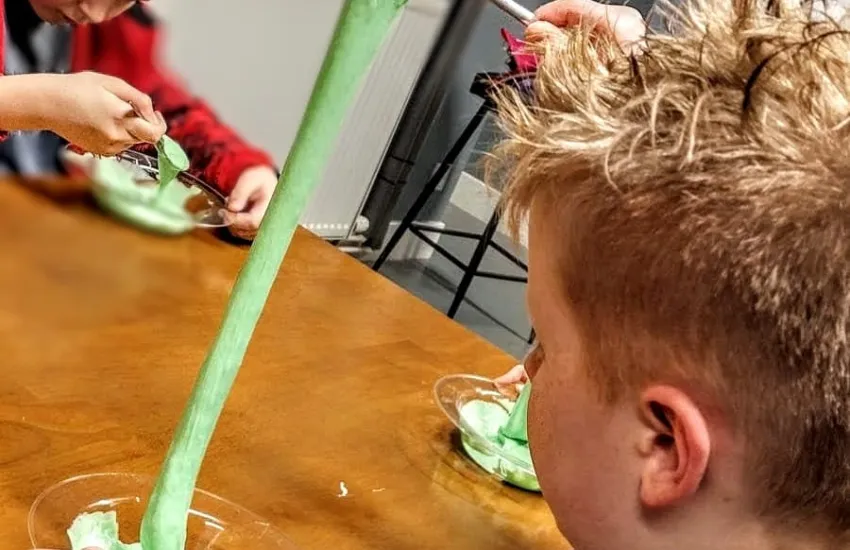
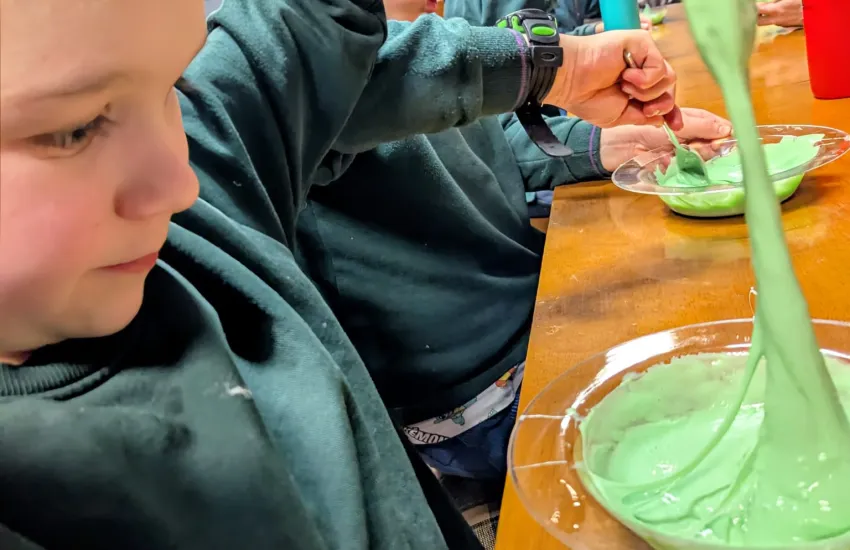
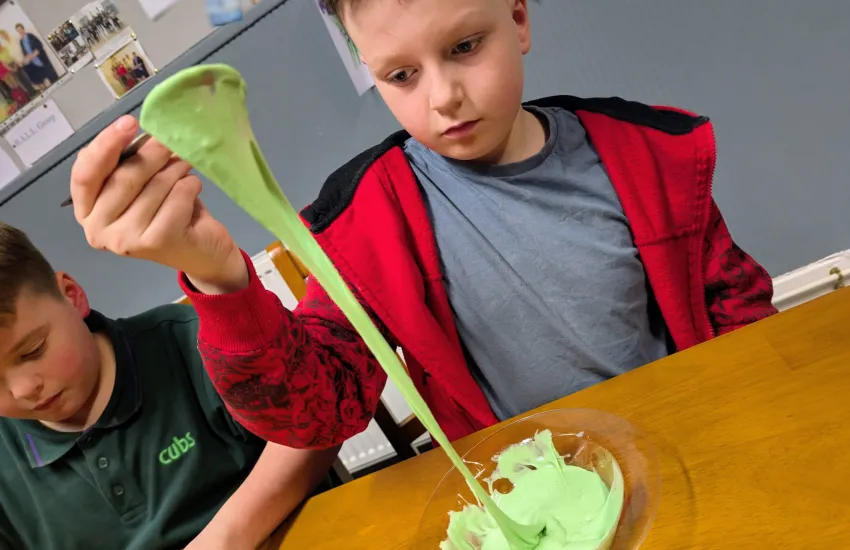
The Cub Scout Scientist Activity Badge is one of the most exciting awards for young explorers to earn, as it encourages them to dive into the mysteries of the physical and living world through hands-on experiments. One of the most popular ways to fulfill the requirements for the "Reactions" or "Kitchen Chemistry" section of this badge is by making slime. It is a brilliant activity because it combines messy fun with a genuine "eureka" moment about how different materials interact.
When our pack of Cub Scouts got together to make slime, they are doing much more than just creating a gooey toy. They are acting as junior chemists. By following recipe by mixing PVA glue with a safe activator of contact lens solution and baking soda, they are observing the birth of a polymer. In the glue-based version, the long, chain-like molecules in the glue, called polymers, are essentially tied together by the activator in a process called cross-linking. This transforms the runny liquid into a stretchy, bouncy substance that behaves in ways that seem to defy logic.
The real magic happens during the testing phase, which is a core part of the Scientist badge requirements. Cubs are encouraged to explain what they have found out, and with slime, there is plenty to discuss. Slime is what scientists call a non-Newtonian fluid. This means it doesn't follow the normal rules of liquids like water. If you poke it hard or roll it quickly into a ball, it feels like a solid, but as soon as you stop applying pressure, it melts and flows through your fingers like a liquid. Watching a group of Cubs try to "punch" a bowl of cornflour slime only to have their hands bounce off the surface is a fantastic way to illustrate the concept of viscosity and how pressure changes it.
Beyond the chemistry, this activity helps Cubs develop essential scientific skills such as measuring ingredients accurately, following safety instructions, and recording their observations. Many leaders encourage their Scouts to experiment further by adding food colouring, glitter, or even seeing how the temperature of the water changes the consistency. By the time they have cleaned up the inevitable mess, each Cub has not only earned a piece of their badge but has also gained a deeper understanding of the hidden science found in everyday household items.